Tobias Kratzer is enjoying tremendous success : his production of Tannhäuser in Bayreuth broke all attendance records at a time when the festival is reportedly struggling to fill seats, while his production of Rheingold in Munich was one of last season's triumphs and heralds a Ring full of surprises. Finally, he has just been named ‘Director of the Year’ by the monthly magazine Opernwelt.
‘The Wanderer’ has been following his career since its inception, even before reporting on it on the blog or website, as I saw his first production of Tannhäuser in Bremen in 2011. The blog and website then reported on many of his early productions, in Nuremberg (Les Huguenots), Karlsruhe (Die Meistersinger von Nürnberg, already extraordinary and inexplicably never revived, Le Prophète, Götterdämmerung) and now, of course, accompany his more recent successes (see list below). This site also devoted a first interview to him in Lyon on the occasion of his Guillaume Tell. He is now a star director and, to everyone's surprise, has been the happy intendant of the Hamburg Opera since last August.
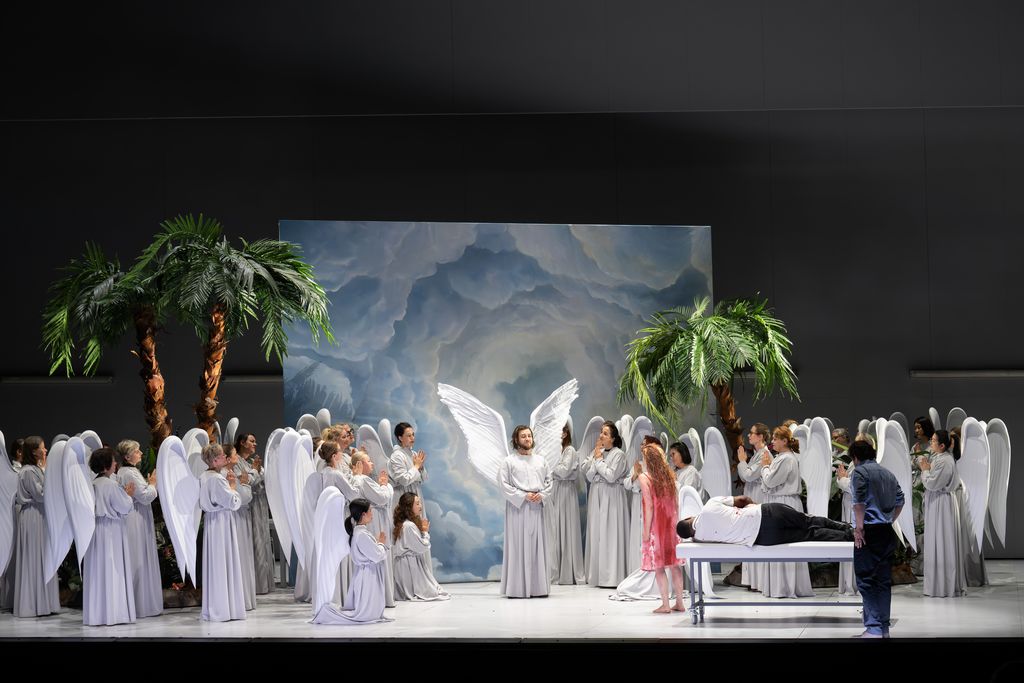
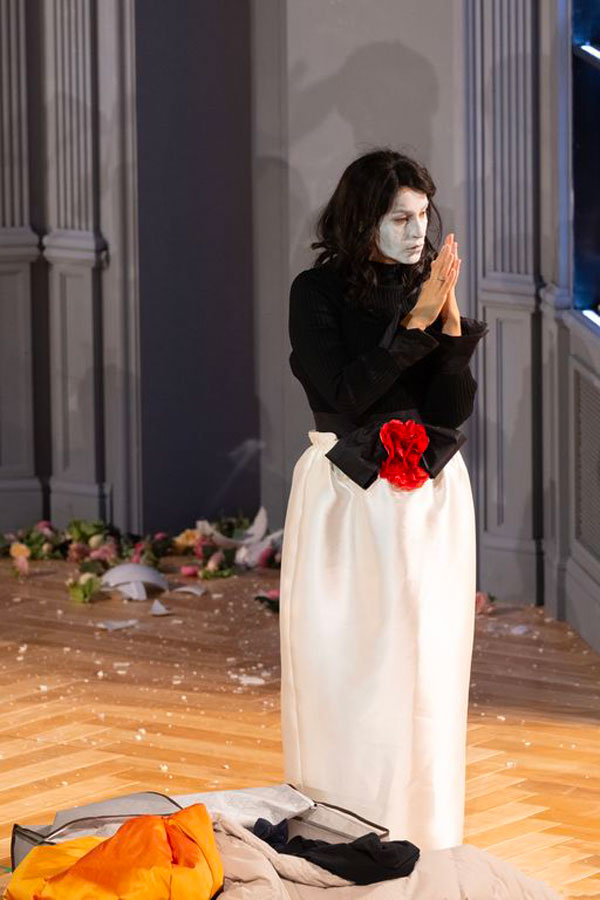
On the occasion of the season's opening, with two productions (Schumann's Das Paradies und die Peri and a production for children, Die Gänsemagd by Iris Ter Schiphorst), I met him again, smiling, laughing, full of plans and optimism in his director's office, from which you can see the whole city of Hamburg. So, ‘Here's to us, Hamburg!’
Addendum: List of Tobias Kratzer's productions reviewed by Wanderer (with corresponding links)
Reviews in English:
2020: Fidelio (ROH London)
2025: Das Paradies und die Peri (Hamburg)
Reviews in French
2014: Les Huguenots (Staatstheater Nürnberg)
2014: Die Meistersinger von Nürnberg (Badisches Staatstheater Karlsruhe)
2015: Le Prophète (Badisches Staatstheater Karlsruhe)
2017: Götterdämmerung (Badisches Staatstheater Karlsruhe)
2018: Vasco da Gama (L’Africaine) (Oper Frankfurt)
2019: Tannhäuser (Bayreuther Festspiele)
2019: Guillaume Tell (Opéra de Lyon)
2020: Tannhäuser (DVD)
2021: Faust (Opéra national de Paris)
2021: Faust (Opéra national de Paris) (Streaming)
2021: Der Zigeunerbaron (Komische Oper Berlin)
2021: Maskerade (Oper Frankfurt)
2021: Tannhäuser (Bayreuther Festspiele)
2022: Tannhäuser (Bayreuther Festspiele)
2023: Tannhäuser (Bayreuther Festspiele)
2024: Faust (Opéra national de Paris)
2024: Intermezzo (Deutsche Oper Berlin)
2024: Die Passagierin (Bayerische Staatsoper)
2024: Tannhäuser (Bayreuther Festspiele)
2024: Das Rheingold (Bayerische Staatsoper)
2025: Die Frau ohne Schatten (Deutsche Oper Berlin)
2025: Die Gänsemagd (Hamburg)
When you're a successful director like you (you were even named ‘Director of the Year’ a few days ago by the jury of Opernwelt magazine), what on earth possessed you to become an opera manager, with new responsibilities and new problems ?
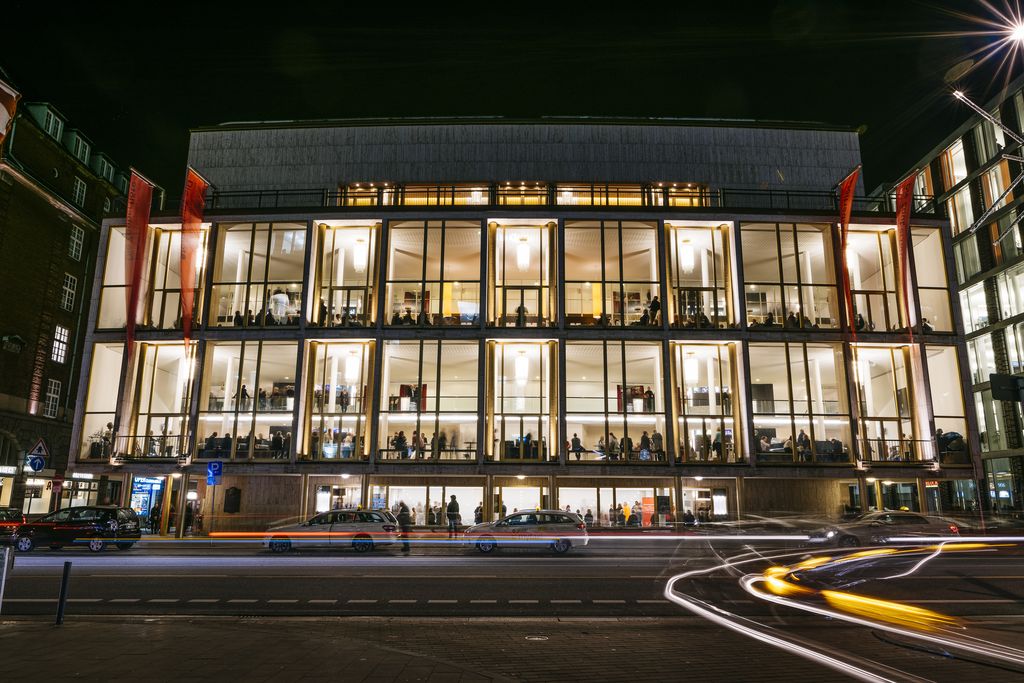
It would be a shame if only directors who had failed in their careers became opera managers. That's it...
I think that if a director becomes an artistic director or opera manager, he must be in full possession of his artistic powers and not, so to speak, when his career is already in decline.
I've always found it interesting when a director becomes an intendant, if they do so while still at the height of their powers and not at a time when they say to themselves, ‘Oh, my career is on the wane, I need a lifeline’.
To be perfectly honest, I have to say that it wasn't on my bucket list. It wasn't my secret plan all along, but as they say, ‘I jumped at the chance’.
When the selection committee made this request, there were some opera managers on the committee whom I know very well, Dietmar Schwarz (Editor's note: Deutsche Oper Berlin) for example, Bernd Loebe (Editor's note: Oper Frankfurt), and Nora Schmidt from Dresden, who was still in Graz at the time. I thought to myself, ‘If they trust me, it must be interesting...’ I was asked if I wanted to enter the race and I started thinking about it over the summer. Other theatres had already approached me several times, and I had always said no, but I thought that here in Hamburg there was something exciting to be done. It is indeed a very interesting theatre in the sense that it has enormous potential, which it may not have managed to realise in recent decades. It was really exciting to develop a narrative that would live up to the status of the city and the theatre.
So I drew up a concept document, which I really enjoyed doing. I took great pleasure in this process of reflection, which was very warmly received here. Negotiations continued with me in parallel with another major opera house...
As I found myself in a situation where two very large houses were interested in me, I said to myself, ‘Why not go for it!?’
It's true, it's an important job, everyone always says it's a hotbed of problems. But directing is not all sunshine and roses, so to speak, every day... As a director, I'm there to bring my artistic vision and overcome any challenges that arise along the way and resolve them with a team. Directing isn't a job you do poetically, quietly and alone in your room. Here too, you have to be very diplomatic, do a lot of politics, and also... a lot of administration. To that extent, and given that I am at an age (editor's note: 45) where one can already think about the next generation, one can also think beyond the scope of production. Perhaps it is also time to do something for the genre as a whole. The work of a manager offers wonderful creative opportunities, i.e. working not only for a single production, but for an entire season and perhaps also a little for the future of the genre.
And I found that the planets were well aligned. Especially since I have no bitterness or regrets: I have always enjoyed very good conditions, I have been able to choose exciting projects, and I have always loved what I did. Of course, every company has its difficulties, but it is not to overcome frustrations as a director that I am embracing this new stage in my career. On the contrary, I found that it was actually a logical step.
But staging a production in the theatre you run requires a different approach than if you were staging it elsewhere. You are opening your tenure with a production of Schumann's secular oratorio, Das Paradies und die Peri, rather than a piece from the repertoire. That has a special significance...
It's a programmatic statement. I would even say it's almost poetological, and I find that exciting, because I do believe that directing the Hamburg Opera, that is, the next five years, is a major project in five acts, in five seasons. So I have a very clear master plan for these five years.
If my term is extended or if I want to extend it, there will be a ‘season two’, and then we'll see. But I think very clearly in terms of stages. For me, it's not an ‘open-ended’ project, but rather a very comprehensive, very detailed project, which is a kind of marathon.
It's your “Ring”, in a way.
Yes, absolutely. That's a good comparison. It's my Ring in five seasons.
It's like a cycle, there are five seasons for which I set the starting point myself, I will also set the end point for these five years myself, and in between, I will also set important points and, at the same time, set up projects with other artists.
It's something I sometimes miss in other companies where the whole is not considered an artistic project, but rather based on external necessities and, so to speak, moving from one season to another, from one work to another, according to needs... It's not a comprehensive version and colour isn't that important, whereas I think colour is the fundamental point. An Intendant who is also an artistic director is also something that the theatre landscape needs.
That said, I don't think it would be a good thing if every theatre were run by an artist. A mix is needed, but I find it a shame that after Barrie Kosky (Komische Oper Berlin) and Jossi Wieler (Staatsoper Stuttgart), there is no longer a single theatre among the 13 largest opera houses in Germany that is run by an artist. So I saw myself in this unique situation with this responsibility.
Do you want to start your own artistic revolution?
A revolution is a big word... I don't know, no... but in fact, for me, the idea is to consider these five years as a grand staging of the company, if you like, and that's already important, and I think there's a difference between joining a company and saying ‘yes’ while continuing as usual, and joining while changing perspectives.
Now, I want to change the structure of the house according to what I can do with it artistically.
The idea is rather to have a clear vision of what I want to do, then to bring everyone with me, and finally to try to build the structure that corresponds to the project.
These are, I think, two fundamentally different activities. On the one hand, there is a kind of Christopher Columbus who would say, ‘This is the goal, now we have to build the fleet, we have to recruit people, we have to motivate them all, and we have to take enough alcohol and carrots with us,’ and on the other hand, there is a naval engineer who would say, ‘Right, now I'm going to build a sophisticated ship, but I'll see where it takes me,’ and I think both can work. One corresponds more to the managing director, the other to the artistic director. Of course, every institution has different needs, and I felt that such a vision was in fact quite appropriate for Hamburg.
Hamburg is a city that does a lot for culture, I think.
Yes, and that's great, because it means I have a lot of support from the senator responsible for culture. That's important.
It is true that Hamburg has two highly prestigious theatres, the Thalia Theater and the Deutsches Schauspielhaus, a recent auditorium, the Elbphilharmonie, which is a major architectural landmark, and an opera house with a long tradition that has more or less always functioned quite well. What do you draw from the tradition of this institution?
Many things, in fact.
In my third year as director, i.e. for the 2027-2028 season, we will be celebrating the 350th anniversary of the Hamburg State Opera, and in the history of the State Opera, there have been many General Music Directors (GMD) and intendants who were themselves creators, not just ‘performing’ artists like me. All these people managed the institution on an administrative level, but they also created things, and we are carrying out a small series of projects, starting now with Gustav Mahler and Christoph Marthaler (Editor's note: in January-February 2026), followed next year by a major Liebermann project, then a Hans Zender project (editor's note: who was GMD in Hamburg between 1984 and 1987), where we are actually presenting these colleagues not only as directors or GMDs of the Opera, but where we are examining how their music can be integrated into the theatrical realm. Let me explain: it is clear that Mahler can be integrated, but how can he be integrated into a theatrical setting, for example? We know that Liebermann was once an opera composer, but who knows that today? Where do we start with Liebermann? Where do we place him?
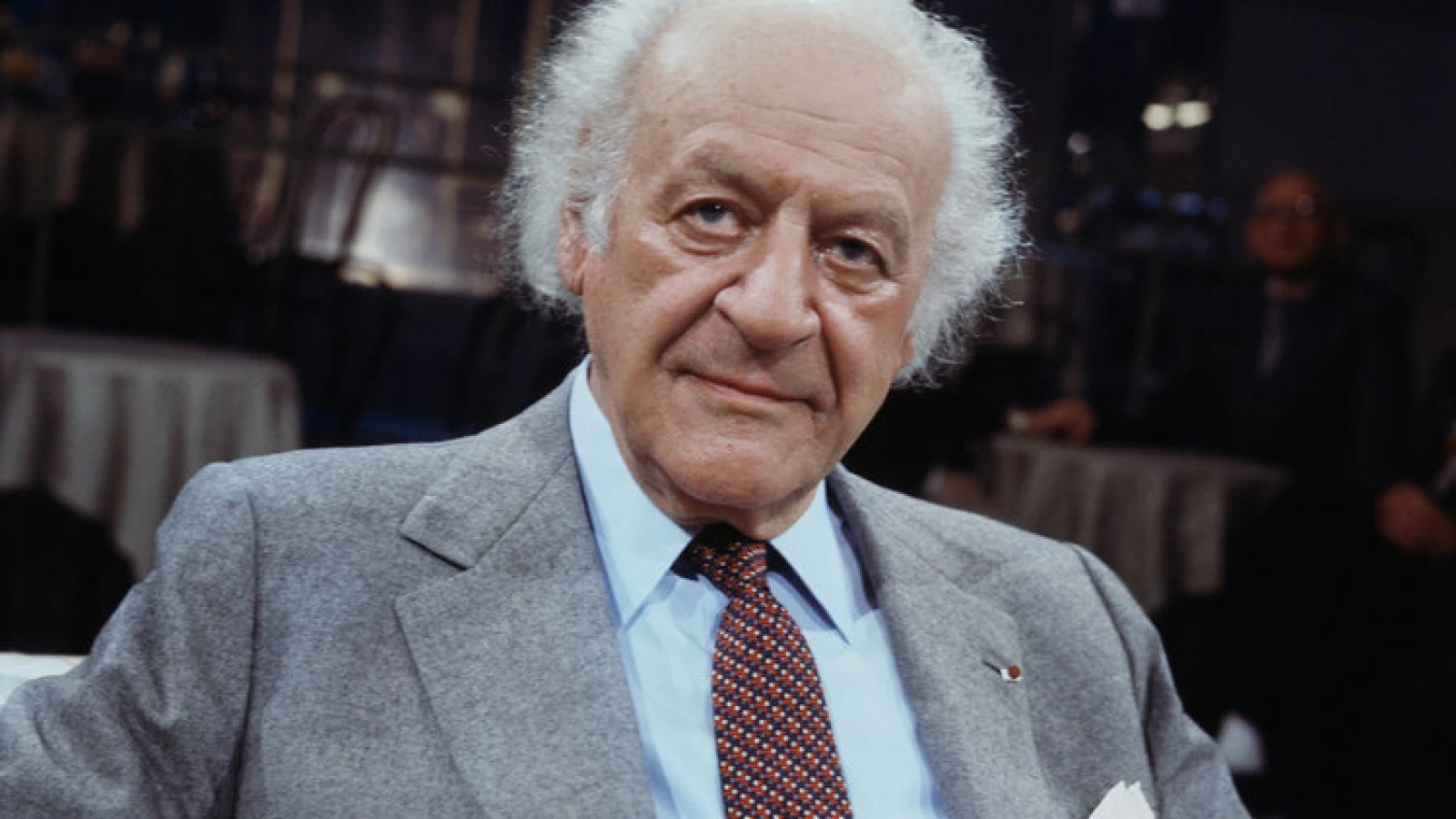
Hearing about Rolf Liebermann touches me deeply... As an opera lover, I consider myself a son of Liebermann, whose programming in Paris between 1973 and 1980 shaped my tastes and knowledge of the repertoire. So I came back here especially to see, like Proust's ‘Madeleine’, the old production of Elektra by August Everding, which I had seen in Paris in 1974.
I understand better now.
Liebermann interests me as an artist, but also as a creator, because he is of course revered here in Hamburg, whereas his work as a composer, for example, is hardly known. But he is also interesting as a person, who today would probably find himself in difficulty...
I don't know if you've read it, but there's a book written by his ex-wife, Göndi Liebermann, called Spannungen (Tensions)[1], which is fascinating because she wrote it after they separated. She asks him what she should do now that they're separated, and he replies, ‘Write my biography.’
She is truly the embodiment of an abused woman of the 1950s, who revolves around this man and writes about all her problems, but who cannot get away from him. These are utterly fascinating processes. That's why I find Liebermann very interesting as a character, as a phenomenon of his time, but also as an artist, and we're going to turn him into a show that I'll entrust to a director.
[1] Göndi Liebermann, Spannungen, Mein Leben mit Rolf Liebermann, Marion von Schröder, Düsseldorf, 1985
Yes, he's a character, much discussed, by the way... A kind of prince, with his qualities and his dark sides. Princes are rare in opera...
It's really exciting. It's an aspect that we also address in the history of the company. I also think that the company's DNA is really based on the creation of new works, world premieres. Die Eroberung von Mexico (Wolfgang Rihm) was premiered here, Der Prinz von Homburg by Hans Werner Henze, Das Mädchen mit den Schwefelhölzern by Helmut Lachemann (The Little Match Girl), all incredibly exciting works. That's why I said that we need a world premiere here every year.
This year, it is Monster's Paradise. I am very excited about this first year, which marks the beginning of a series of annual ‘surprises’. This time, I really wanted to bring together these two ladies, Olga Neuwith and Elfriede Jelinek, who last worked together 20 years ago. They are both highly fascinating to work with!
Every year, I want a world premiere that breaks out of the bubble of contemporary music and appeals to the city, to theatre audiences, to a wider audience in short. I think it's essential not to produce niche productions, but for a world premiere to be a real event for everyone: I think that's very important.
The third point, I think, and this is also very important, is that we are a repertory theatre
This is the case for almost all opera houses in Germany and Austria.
Yes, but not the Theater an der Wien, for example. Here, two-thirds of the performances are repertoire performances, and I think it's very important not to do this in a timid or incidental way. Indeed, each of the repertoire performances is also a reservoir of history or, so to speak, has its own historicity, just as opera staging has its own historicity. That's why repertoire performances need to be accompanied in a special way.
We don't have an introductory lecture for each repertoire performance, but three students are available to the audience to discuss the staging and the performance, and we add a uniform cover to each old programme-book, which provides a brief historical overview of the productions, so to speak.

In fact, it's a kind of framing, which puts the production back into its context, and this allows the repertoire to be treated with this precision and care. To my knowledge, no other theatre in Germany does this, even though I find it very important. The repertoire should not just serve to fill the seats and make money, which is also important, but that is not my primary interest. What interests me is that the works are reclassified in their history, in the history of the theatre, in the history of the staging...
The repertoire is a kind of slice of the past that you also have to know how to explore...
Yes, exactly.
Of course, to be honest, there are also bad productions, but everything becomes interesting at some point, and we then consider the production to be a symptom of an era if we examine it closely. For example, we have a very old production of Hänsel und Gretel, a little outdated, a little old-fashioned, which has been around for 50 years and is revived every year...
It dates back to the early 1970s, I think…

Yes, it's crazy.
So I started to take an interest in it and wondered: who is this director I've never heard of? It's Peter Beauvais. I don't know if you knew him, but he's really interesting.
He's a director who played a very important role in post-war Germany in television films, so for television. But above all, as a Jew, he emigrated in the 1930s, then he was a bit of an extra for Orson Welles, and he came back here as a translator during the Nuremberg trials. And it's interesting to note that one thing that was very important to him was that the witch should not be pushed into the oven. She must stumble, quite by accident, because he found it unbearable to show a woman in an oven. And at the same time, I don't know of any other Hansel and Gretel that so clearly has a chimney.
I find that when you delve into this story, this staging suddenly takes on great depth and reveals a diagnosis of the era that you wouldn't see at first glance, but as soon as you start to dig a little deeper, it becomes not only a joyful representation of a fairy tale, but also suddenly a symptom of the era, and for me, it's an example where I say to myself, ‘Wow, that's really interesting!’ So, beyond casting the roles well and rehearsing them well, there are also historical layers that need to be taken very seriously. It would be ridiculous not to take the repertoire as a testimony to the past of an era, of a history.
But in the coming years, I'm going to try out a few experiments with the re
Can you elaborate on your intentions?
For example, in two- or three-years’ time, I'm going to stage a Pop Art Bohème, a production in which I consciously manage the fact that this type of repertoire simply has to be performed quickly, like picking up a paperback from the library. I'm not keeping an old reactionary production, but I see it as a product that is easy to revisit, like a paperback book, I repeat.
Here I have that freedom. Elsewhere, I wouldn't see myself asking a director to create a functional and reusable Pop Art Bohème; I would be told that that's not what I came for.
Here, it's an experiment I can afford to do because I have nothing to prove as a director and I can therefore launch into a kind of rapid improvisation, an experiment with the repertoire, which is not without charm, on a work that is constantly being revived. Here, we can also approach the repertoire differently, not as a testimony to a past state of art, but in its functional necessity: we need a Bohème that can be performed quickly and often. That's also what working on the repertoire and programming is all about.
And the ensemble? What role do you assign to it? How important is it?
This is a medium-term project. The ensemble is not as large as in Frankfurt, and the hall is of course more challenging in terms of acoustics. This means that I need other voices, and that, unlike in Frankfurt, I cannot always assign major roles to a smaller ensemble. In this city, which is also historically different from Frankfurt, the relationship with the ensemble and the stars is different. In Frankfurt, people are very attached to their own ensemble and are very proud of it.
Here, people still talk about Placido Domingo, who was discovered in Hamburg, and they also want to see Asmik Grigorian or have a great Falstaff. That's exactly what makes the difference, which is why it's a delicate balance, because of course I want to strengthen the ensemble, but despite everything, I would say that Hamburg is somewhere between Frankfurt and Munich; there isn't, so to speak, the cult of big stars like Jonas Kaufmann and Anja Harteros in Munich. But there is an expectation. Indeed, the audience wants a certain level of excellence and therefore also expects stars. This is the narrow path I have to find over the next five years, but it can't be done with a snap of the fingers. I know very well which pieces I'm programming and what types of voices they require, but the question of casting is of course also a financial one, because we don't have the resources of Munich and, and has to put together an intelligent ensemble, while occasionally hiring Christian Gerhaher or Marlis Petersen. Munich, on the other hand, has a lot more money and can really hire stars wherever necessary.
But are there still stars?
That's the big question. I don't think there are. There are no longer any stars who can immediately fill the house. That's over.
Perhaps Asmik Grigorian. And even then...
But the public still has higher expectations of an internationally renowned artist and of guests, although perhaps the word ‘guest’ is more appropriate. We also want to have guests here who have been heard elsewhere, but there isn't a star who can fill a hall, no, not even Asmik Grigorian, to be honest. Even though she attracts a lot of people, she doesn't completely fill the hall.
It is difficult for most venues to sell out today, and it is necessary to look for new ways. That is why your project is interesting, as it opens up new possibilities in Hamburg. But it also depends on the work with Omer Meir Wellber; in a sense, it is also a joint project.
It's quite dialectical, actually, and quite funny.
This is one of the reasons why we work so well together, because we made our intentions clear from the outset. First of all, we consider the opera programme and the concert programme to be two completely separate entities. Omer is therefore entirely responsible for the concert programme, whereas my predecessors were always also artistic directors of the orchestra. So I take care of the orchestra as an opera orchestra, but Omer has carte blanche for programming symphonic concerts. I think that's very important.
What's interesting, in fact, is that both seasons (lyrical and symphonic) offer new ways...
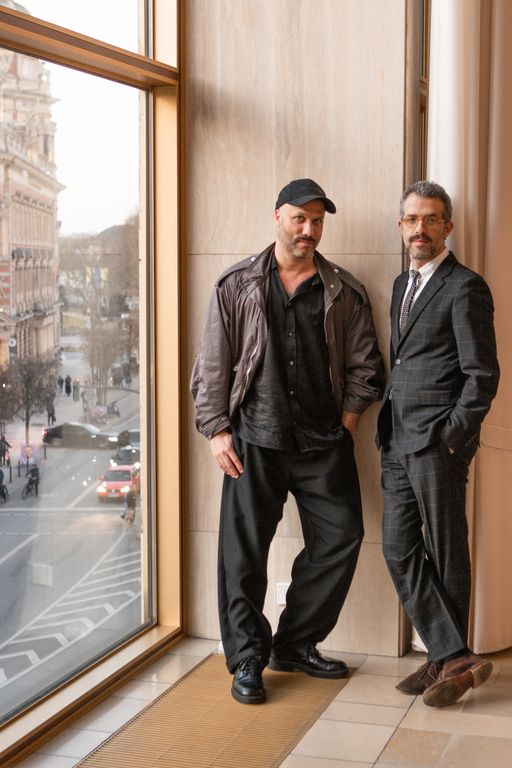
We haven't consulted each other, and it's not coordinated, at least not for the moment. At the opera, I have a very clear vision, which I shared with Omer very early on, for the works and special projects that interest Omer, but also for the works he wants to conduct in the repertoire. In fact, he will conduct a lot of repertoire, which was very important to me, because I wanted someone who wanted to work on the basic repertoire.
At the same time, Omer is someone with whom we can carry out a project such as the Mozart project, Die grosse Stille (The Great Silence), who will also participate in future projects, and who also participated in Das Paradies und die Peri. Over the next few years, he will conduct more classical pieces as GMD, but what is decisive in my eyes is that there is a common vision for these five years, which is not just about filling gaps in the repertoire, but approaching these seasons from a content perspective. It is essential to have a common vision for the house.
But who chose the GMD? How does the process work?
I had a list of conductors, and the orchestra also had its list: it was a list of conductors who could be considered for Hamburg... We compared these lists and looked at the overlaps. There were a few, but above all there was one who was of great interest to everyone, so I approached Omer immediately.
I discussed it with the orchestra very early on, because if we hadn't been able to agree, I wouldn't have accepted the position of Intendant.
In fact, I gave the City of Hamburg two preconditions: firstly, I had to get along with the orchestra and we had to agree on a candidate, because it wouldn't have worked if I had imposed someone on the orchestra. So there had to be a consensus on the General Music Director.
The other condition was that I had to know who would be administrative and artistic opera director (Operndirektorin), because I really have no administrative experience. Of course, I looked at how other institutions operate and made my observations, but I don't know the ins and outs of the business. That's why I needed an opera director I could trust completely and rely on.
Those were the two prerequisites for me to sign.
Coming back to this first season, I've noticed that you're using other forms such as pasticcio rather than ‘traditional’ titles, and pasticcio is becoming increasingly popular...
I think that depends, of course, on what we might call in German the ‘material fatigue of the canon’. All operas revolve around 30 or 40 pieces, on which all directors who have something to say have already expressed themselves.
If I take my own example, my success as a director is based on the fact that I have always managed to bring something new to “classical” works, but I think that, overall, this historical development of interpretive theatre is less productive today.
There are some truly great directors, there are many great female directors, but we now see far fewer new approaches or new perspectives on classical plays. Invention is stagnating a little on that front...
I think that this is, in a way, the result of historical developments, and that the concept of musical theatre, a broader concept of musical theatre, is gradually gaining ground in the sense that everything that is opera, everything that is musical theatre, does not necessarily have to be a closed opera. we can also create marginal forms, we can integrate new music, we can compose something based on other pieces, that is to say, a freer, more open concept that simply creates new works. These are the productions that are often more successful, as you yourself said.
In Salzburg, for example, Hotel Metamorphosis, the pasticcio based on Vivaldi, and Zaide , a pasticcio based on Mozart's unfinished work, were two of the biggest successes...
Zaide was a wonderful evening, truly wonderful. But as I said, I'm not dogmatic; I'm not saying that full-length operas should never be staged, but during the first season we will make it very clear, and this is of course also a ‘political’ statement, that new works of this kind will now be performed in Hamburg, without sacrificing the ‘classics’. For example, there will be a new Zauberflöte in the third year, which will be of great value. So, of course, I will be rebalancing things differently over the coming seasons.
But I felt it was important to go in all directions in this first season. Anything is possible. An oratorio is possible, a pasticcio is possible, an assemblage is possible, a staged recital is possible, Gustav Mahler is possible on stage. I felt these were important flagship projects. If you have to be brave, if you have to assert new things, you have to do it from the outset, because first of all, you have more credibility, and secondly, it attracts attention. Finally, it allows you to really see what works and what doesn't. So, I'll see.
What kind of audience is there in Hamburg?
For this first production of Das Paradies und die Peri, you are addressing the audience directly. What do you want to do with this audience?
First of all, I thought it was important to address the audience and embrace them as the new “Intendant” and as a new team.
Initially, it's important to have a clear message and to ensure that the main audience, who are here and who come here regularly, continue to feel welcome.
Many managers often say, for example, ‘the audience needs to get younger’, with this latent shame associated with age. I find that very serious, I never wanted that. The audience should be made up of all age groups. And everyone should be able to find enjoyable entertainment in a city if they want to, I think that's very important.
At the same time, I think that in Hamburg, as you yourself said, there is a large theatre audience, Schauspielhaus, Thalia, very intellectual, a large audience for the Kunsthalle, for the Deichtorhallen (editor's note: a prestigious exhibition venue in Hamburg), and these are all people who are interested in art and culture in general. But who, for the moment, are not necessarily interested in opera.
An opera premiere is therefore not currently something that the cultured bourgeoisie in Hamburg feels obliged to see, as may be the case in Munich or as is the case in Hamburg for an exhibition at the Deichtorhallen. And this is an audience that, I think, needs to understand that opera is also a key medium, that it is something you ‘have to have seen’ if you want to have a say in cultural matters.
Furthermore, I think that as a young person, you should have the opportunity to see everything and not be discouraged by social norms or financial barriers. That's why we are now opening dress rehearsals to the public, which is standard practice in Paris, Brussels and Turin, as I have seen. We are opening them to all students, apprentices and pupils, who can get a free ticket to attend the dress rehearsal. I think it's important that people have the opportunity to see new productions. Whether or not they remain loyal to our theatre afterwards is another question, but first and foremost, as we receive a lot of money from taxpayers, young audiences should also be able to see the things that everyone here co-finances. I think this is absolutely essential.
It's true that people often say that opera is too expensive, that young people can't afford to go, but when they go to a pop concert, for example, it costs more.
But the difference is that no one pays taxes for pop concerts. That's the difference for me.
Opera is co-financed by everyone, which is why I think we need to make it more accessible, so that everyone feels at home there and can walk through the door naturally.
Opera is a symbol in France, often still a symbol of social status, not everywhere, but still too often. You know Lyon, it's a very open audience, because it originally comes from the theatre (the tradition born in Lyon at the TNP – Théâtre National Populaire, with Roger Planchon and Patrice Chéreau)
That's really great. Hamburg is also a bourgeois opera house, and that goes back a long way. We don't have a feudal tradition in Hamburg when it comes to opera, no ‘court opera’; we have more of a bourgeois tradition, and that is of course a determining factor.
I would therefore say that no theatre in Germany today is defined by its feudal origins. It would be absurd to say that the Bavarian State Opera or the Weimar Theatre have feudal structures because they were once court theatres. Nevertheless, I think that this form of accessibility as a bourgeois opera is a decisive factor, which has developed significantly over the course of its history. I take this character very seriously for Hamburg, and I also find it exciting to devote myself to it in order to build my relationship with the audience.
There is also talk of a new opera house?
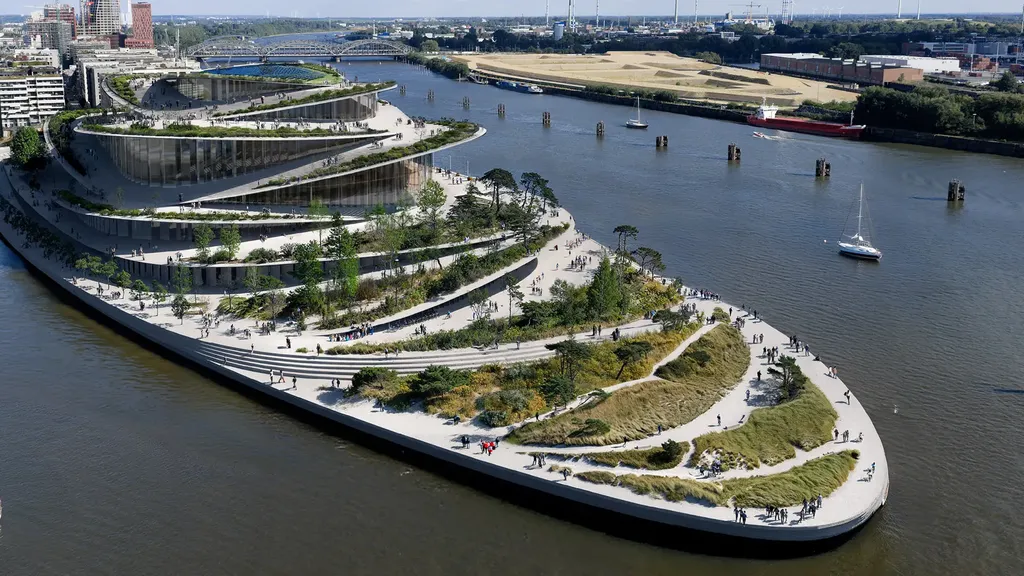
Yes, the process is underway. There is a donor, Klaus Michael Kühne, who is the richest man in Germany and comes from Hamburg. He is now 88 years old, and an architectural competition is already underway. The jury will meet in mid-November, and I am part of it. Five firms are already working on the project, and we will choose a design in mid-November, which will then be finalised.[1]
Kühne will once again have the opportunity to withdraw. But if he says, ‘Yes, I'm going to see it through,’ then he will get the contract, finance the entire project and then donate the building to the city, which is of course a wonderful prospect.
[1] In the meantime, the jury met and selected the design (see photo) developed by the architectural firm BIG, based in Copenhagen.
And where is it planned to be built?
Near the Elbe. A little further inland than the Elbphilharmonie, but directly on this bank of the Elbe.
But is a new hall a useful project for Hamburg?
Yes, absolutely. This building has been in need of complete renovation for 56 years. It is far too cramped, we have virtually no backstage area, we cannot cooperate with many theatres, we cannot store many productions at the same time, which is why there is always incredible traffic, and we have also reached our limits with the offices, so it's no longer really possible. As we are also in this cramped city centre, we cannot expand. The building is therefore in urgent need of renovation, cannot be expanded and is absolutely no longer state-of-the-art.
I would say that we are doing the best we can in this building, but I consider the new construction to be important and very welcome. I know there is a lot of criticism, as is often the case in such situations, because people wonder where the money is coming from, whether it could be used for other purposes, etc., but I am totally in favour of it, in the interests of art.
Horizon 2030?
Horizon 2032 to 2034, but I'm working on the realistic assumption that it will be more like 34 or 35 at the earliest, but as soon as the green light is given, the construction will be private, which means it could happen very quickly. Mr Kühne would also like to inaugurate as many construction phases as possible himself. He is already 88 years old and I think he would like to get things moving quickly, but as I said, I'm rather pessimistic about the time frame (Editor's note: Remember the never-ending saga of the construction of the Elbphilharmonie...), but I must say that I'm very optimistic about the project itself, and I'm very excited, as I said, that the plans will already be presented in mid-November. Time will tell.
There is already a contract between the city, Kühne and his foundation, so it's actually already very, very concrete, which is another exciting aspect. I arrived here as director at a time when there is a lot to do and, at the same time, there is a lot, a lot of hope for the future, really a lot, and you can't say that about all German cities. In Berlin, it's exactly the opposite: the danger is that an opera house will close, and for us here, the greatest danger is the hope that a new opera house will be built.
Let's get back to your cultural project. You described your project as a kind of ‘Ring’, so what are the different ‘days’, the different stages?
The first season is really about opening up a space for everything that opera can do.
That means creating a field of possibilities with different types of projects and different types of composers, to see what interests people, what the audience responds to, and what leaves them with doubts or doesn't work so well.
The second year will be more accessible, in a way. We will start with the great classical repertoire. We will also have a new work, but it will be a family opera, so not something very avant-garde like the current one with Olga Neuwirth, and it will be performed in a marquee. We will organise a small festival aimed at a less knowledgeable audience, so in the second year I will try to work more directly on the basic repertoire. I will also try to break out of the ‘cultural bubble’ more to really reach out to more diverse sections of the population.
If the first year is about saying ‘we are here, these are our artistic references and we are trying to put everything back on the table’, the second year is more focused on the city, less international, to try to interest a different, wider audience.
The third year is the centrepiece of the project, our big jubilee season, when we will really focus on the history of the house, with, so to speak, a confrontation with the famous productions that took place at the Hamburg Opera.
We will be collaborating with the orchestra and the ballet, which is also very important here, and probably putting on a joint production, so we are really trying to present these 350 years as a major anniversary programme.
During the fourth season, I will draw more on the experience gained during the first three to enrich the repertoire. I will try to fill in the gaps, so to speak.
It is also very important to rethink interpretative approaches. Without having strict guidelines for the programme, there are themes that we will address over five years. Postcolonialism is one of them, so next year there will be a Henze project, and we will also continue this reflection with a Julius Eastman project, i.e. a person of colour, a queer minimalist composer, whom we will contrast with Philip Glass, so there will be guidelines rather than strict programme themes.
And the fifth year will depend on what happens next... We will then have to decide whether it will be a grand farewell season to the five years spent in Hamburg, during which we will take stock, or whether we will be extended for another five-year mission, thus shaping the work over a decade. But what is clear, and what I believe unites all the seasons, is that it must be both entertaining and intellectual.
That's what I tried to do at our season opening concert, it was important to me. We started with a new setting of Hölderlin by Marko Nikodijevic, a very strict piece with an important text by Hölderlin. And I ended with a popular song by Udo Jürgens.
I thought both were important, and in between there was Charles Ives and Olga Neuwirth and an artistic whistler, etc. I've always thought it was important to have this balance: it has to be a place where people can have fun, but high-quality entertainment
You're still a director. How do you see your profession evolving?
It seems that there is less demand for ideology, for example.
There is also a trend today towards meaningless formalism, which can be very colourful, but which ultimately offers no interpretation, no depth of field, empty and hollow...
And that leaves me indifferent. It bores me.
No, here we want to programme projects that have depth in terms of content. Of course, I would not rule out the possibility of also having, so to speak, formal approaches such as colour, for example, or installation-based approaches, which interest me but are not my world.
I also try to hire directors who do something very different from what I do. But I think there has to be aesthetic depth and also an inspiring approach.
I don't want a monoculture, so there are things that I find very interesting, which will find their place here in the coming years, and which have nothing to do with what I do. But I only programme shows here that I would like to see myself, which is perfectly normal.
But today, we don't see many new directors emerging who make us say, ‘Oh, this is really something new’.
As artistic director, I see this and I also see it with concern for the future, of course.
Nevertheless, I consider my personal development as a director and tell myself that I still have things to say; I don't see myself as being at the end of my career yet, but I do see that when I look for younger generations, there isn't an abundance of interesting profiles. I say this very honestly.
I'm not just talking about young directors, but people of all ages. I found Christopher Rüping, a director who only does theatre, extremely interesting. I also reserve a place for true old masters like Marthaler, as you have seen. He is, in a way, a legend of world theatre, one might say.
Christoph Marthaler is obviously a fascinating director, but even today he is not always understood in opera, as was the case with his recent Falstaff in Salzburg, which was heavily criticised.
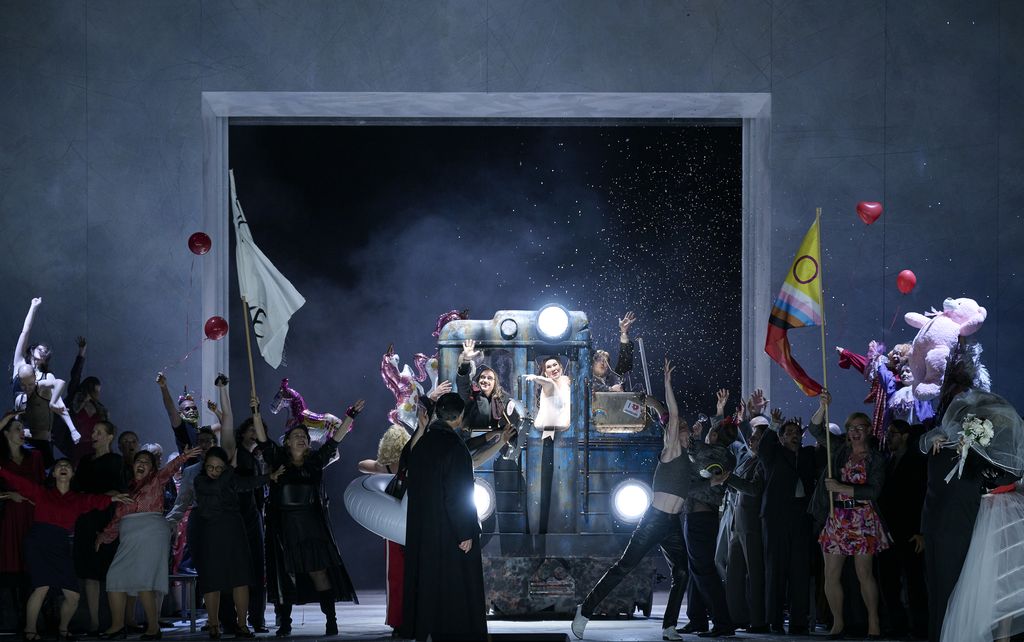
That's why I'm doing this Mahler project with him, which will be something very special. That's also why, on another note, I'm now trying to explore something else with Ruslan und Ljudmila[1]. In a way, I'm testing a younger team.
That's exactly what's great, exploring... Let's hope it works out well.
It's always exciting to see what the director is doing, what the project is as a whole. I don't define the programme I'm doing here solely on the basis of the names of the directors, but the fact remains that this exploration of new worlds is fascinating.
I'm also going to do two projects with Bastian Kraft, who comes more from the theatre world, but who did a very interesting Rusalka in Stuttgart. He's going to stage a classic piece from the repertoire here, then a new work. So I'm trying to be very clear. I'm thinking about the project from the director's point of view, without being a slave to the standard programme offered by many theatres. Of course, I'm going to propose a new Carmen, because it hasn't been performed for a long time, and a new Aida, which has also been absent for a long time, but now I'm desperately trying to find a director who hasn't done these works yet, which is often how it happens. And if we take Don Giovanni, Warlikowski, Tcherniakov... they've all done Don Giovanni. I must be the only one who hasn't done it yet (laughs).
This is what I call, in a way, ‘staging’ my project. It's basically my main skill.
Obviously, there are various ways of being an intendant, but it's important to know what you can't do and to rely on a team and a pool of talent.
[1] Ruslan und Ljudmila, directed by Alexandra Szemerédy and Magdolna Parditka, premiering on 9 November 2025.
You embarked on an opera project for children, for example. You staged Die Gänsemagd with Matthias Piro. Why?
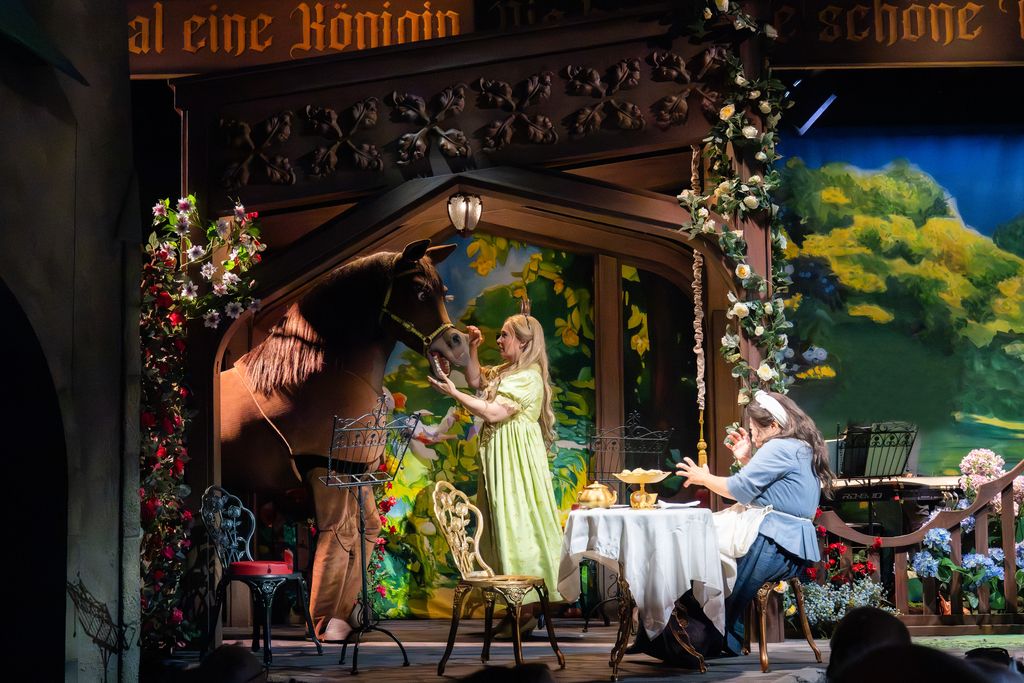
I felt it was an important statement, almost a political statement, to make right from the start.
The work is not entrusted to an assistant director and we are not only doing it with young singers, but really with the stars of the troupe. Helen Kwon sang the role of the Queen of the Night here 40 years ago and has performed major roles for decades. I think children should also benefit from high quality.
It was a political statement, so to speak, that the opening production was directed by the artistic director himself. I also enjoyed doing it, because you have to think very carefully about the dramaturgy: you can really enjoy yourself, but at the same time you also have a good test audience, because children get bored or lose concentration immediately if it doesn't work. That's why I'll do it again...
I also thought it was important for the children to be directly confronted with very advanced music, that they shouldn't be given Die Zauberflöte for children, but that they should immediately discover that composers can be alive and that they can also be women. That was actually a really important message.
And it worked well.
Of course, I couldn't do everything on my own, otherwise I wouldn't have been able to meet my three different challenges: Peri, Die Gänsemagd and running the house. So I prepared everything and during the final rehearsals, Matthias Piro took over, because I was more often at Peri and he was more often at Gänsemagd.
You're not Shiva...
Absolutely (laughs). And I'm very happy, because it was very well received in the city.
So it's also a way of telling the city that the director doesn't just care about his cultural reputation, but that he really cares about the parents who come with their children so that everyone can have fun.
In fact, artistically, this opera has everything going for it. Traditional forms, traditional duets, traditional rhythms... The lyrical landscape is completely classical, and the music is contemporary.
Absolutely. And when the children go to a grand opera later on, they will understand what you are describing. They have already assimilated this landscape, this vocabulary, this grammar, in a way, because it is an incredibly accomplished work. A beautifully composed opera is, in my opinion, a very good piece, and I really enjoyed working on it.
And now, I finally wanted to talk about you, as a director ‘elsewhere’... You're doing the Ring in Munich...
Yes, just one more little thing...
I'm very happy, really very happy that Das Rheingold worked so well, because I said I would honour all the contracts I had signed, a bit like in the Ring, where you are only what you are through contracts (laughs). Of course, it's not just a question of contracts, my heart wanted to do the Ring in Munich.
What is the idea behind this Ring? The end of the gods?
Yes, that's right...
But how are you going to develop it?
We have to move forward step by step, so to speak. I don't want a Ring with a single thesis; I think it will really be the result of a real evolution.
In Die Walküre, we will now see what the renewal of the gods means and observe the parallel evolution of gods and men. This is an important question, because this Wotan is not a benevolent Christian god, he is more of an Old Testament god. How, for example, do men on Earth become radicalised? I find Hunding to be almost a fervent believer, a kind of fanatic, as if he were part of a sect, and as such he is extremely interesting.
What also happens to art in a world where religion becomes so strong?
In fact, it is the opposite evolution to that of Wagner, where art replaces religion, which disappears. Is there in fact a reactionary step backwards, what is happening on earth in this regard? I try to consider all these details in The Ring, where it is so easy to forget, for example, that Alberich raises an army against Wotan.
That is why Wotan must invoke the Valkyrie.
Even though we never see Alberich, I think this intensifying struggle between the two is very important in Die Walküre.
Furthermore, I find Wotan's inner experience to be very important here: how does the god suffer from his immortality? In fact, Wotan's problem is that he has lived as a mortal... And here I also find a phase that is not composed in the Ring, that does not appear and is therefore always forgotten. There were indeed those few years of happiness for Wotan, when he lived with a mortal woman in the forest, and I feel that for me, this is the moment when he escaped Nietzsche's ‘eternal return’. For a few years, he experienced a kind of happiness, because he could consider himself mortal and did not feel the eternal return. But this happiness was shattered, destroyed, annihilated, plunging him into total fatalism, and this is of course a development that I find in this work.
These points have never been explored with such clarity in a Ring. So in my discourse, I try to take divinity seriously as a working hypothesis, however absurd it may seem, to see what results in terms of psychological distress, because this then becomes transposable again in the form of a metaphor for mortals. This is the path I continue to follow in Walküre.
Siegfried then takes on a whole new colour, because we have to consider very, very strongly the tragedy of Mime, who is not a funny character, but who is also a truly incredible character. In Rheingold, he was desperately abandoned with his dead dog and truly stripped of everything, and now he has this son and basically it's like the tragedy of fatherhood, but perhaps also like the tragedy of the lonely man who is trying to find someone he can connect with and who is also faced with the demands of adolescence.
I'm really trying to approach this in a very theatrical and playful way, but also in a very existential way, because I feel that everything has already been said in, let's say, Marxist interpretations, but not only that: in fact, all the ‘meta-discussions’ have already been played out. From Chéreau to Castorf, everything has been said.
So I'm really going to try a post-Marxist interpretation, grasping the thing in an existential way, taking it back to basics, so to speak.
That's what I'm trying to do now with Walküre and Siegfried.
With Götterdämmerung, I'm obviously going to do it differently than in my previous Götterdämmerung (Editor's note: Karlsruhe, 2017). There will be similar motifs, but in principle, I'm trying to really come full circle in a different way, because I find it exciting to tell the big story, the big narrative arc, and not just the parts that relate to it.
And is the Ring the only project you have outside Hamburg?
In the first two years, it is indeed the only project. After that, I have two more co-productions and two projects as a guest. And there is still a co-production project with Munich under discussion, but I will not be doing any productions as a guest in Germany, so to speak. I'm still working a little internationally. I'm going to make my debut at the Vienna State Opera, where I've never worked before, and I'm going to do another production in Zurich.
So we have a lot of interesting co-productions and I'll be making a few international appearances. But in Germany, I'll be focusing on Hamburg first.
The company must be able to count on the fact that it has, so to speak, a certain exclusive right to me.
Shall we do the next interview to take stock?
Or in the meantime, for the anniversary! For now, let's not think about taking stock, let's talk about projects.
© BIG & Yanis Amasri Sierra, Madrid, Spain. (New State Opera Project)
© Matthias Baus (Ruslan/Portrait Kratzer)
© Monika Rittershaus (Peri/Gänsemagd)
© Stern-Anne Hamburger (Tobias Ktratzer /Omer Meir Wellber)
© Robert Haas (Portrait en-têteTobias Kratzer)
© Teresa Grenzmann (Répertoire)
© Niklas Marc Heinecke (Staatsoper)