
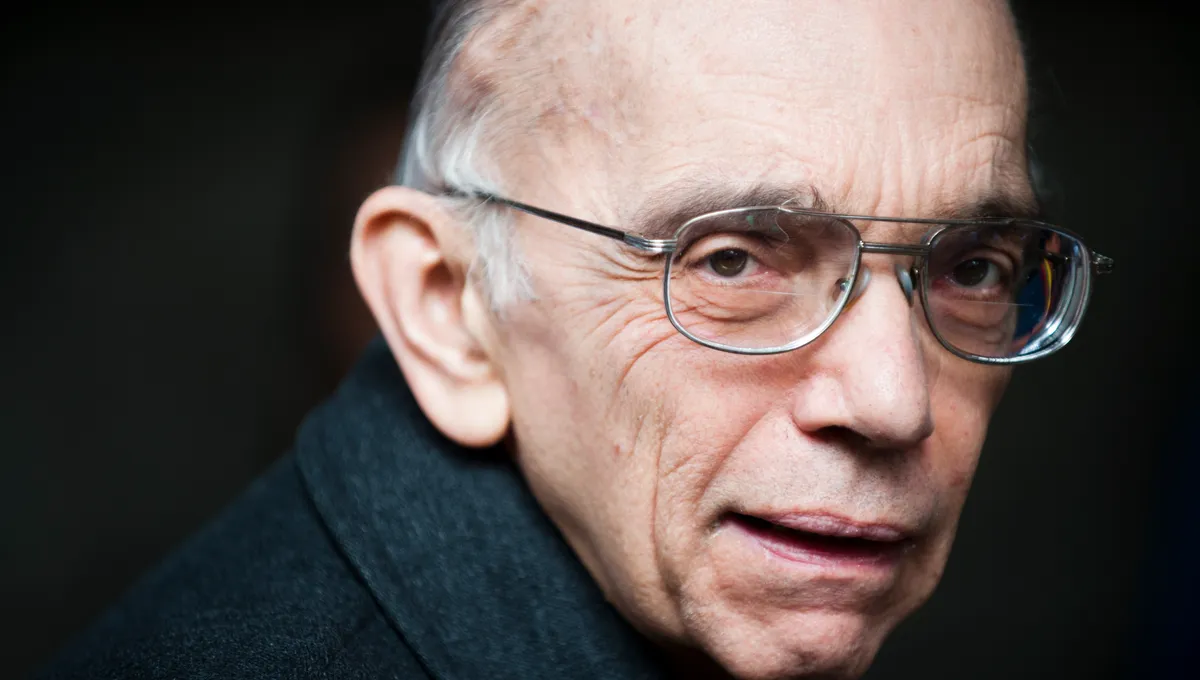
At a time when everyone is talking about Venezuela, its dictatorship and the predatory behaviour of a modern Dr Strangelove[1], I would like to remember an exceptional Venezuelan who certainly deserved the Nobel Peace Prize for which he was nominated in 2012 : José Antonio Abreu (1939–2018).
In 1975, this economist founded “El Sistema” (“Sistema de Orquestas Infantiles y Juveniles”), which aimed to bring disadvantaged children into orchestras, supported by all Venezuelan governments since then, including Chávez and Maduro. The work has survived Abreu, who died in 2018, as can be seen on its official website. Having attended several concerts of the Orquesta Sinfónica Simón Bolívar de Venezuela, founded in 1978, for the first time in 2000 (with a very young Gustavo Dudamel, aged 19, at the helm), and then when Claudio Abbado, who spent several winters in Caracas working with young people, conducted them in Seville and elsewhere, I have followed this incredible story for some time. The Orquesta Sinfónica Simón Bolívar de Venezuela is at the top of the pyramid of youth orchestras in Venezuela, of which there are about 1,500, serving 900,000–1,000,000 children out of a population of 28 million.
This pyramid-shaped organisation has had very different effects : firstly, in the families concerned, among the most disadvantaged, for whom “classical” music was a totally foreign world, it has boosted self-esteem, steering these young people away from the traditional dangers known to all, such as drugs, crime, etc. Secondly, it has enriched the country by creating a real audience of young people. I remember Gustavo Dudamel telling me (in 2004!) that he was surprised during his first European concerts to see so few young people in the audience, whereas in Venezuela entire buses brought young people to concerts. Finally, El Sistema has produced artists, high-level musicians who are members of various international orchestras and conductors, in addition to Gustavo Dudamel, such as Diego Matheuz, Christian Vásquez, Rafael Payare and Domingo Hindoyan.
It is clear that El Sistema, which existed before Chávez and Maduro, also served as a calling card for their regime, and Chávez had supported its organisation by generously financing the purchase of instruments, which is essential when such large numbers are involved… And the dictatorship reinforced by Maduro has maintained this unique organisation, initially brought to international attention by Gustavo Dudamel. The latter distanced himself from the regime and, as a result, the international public has somewhat distanced itself from the project and the joyful tours of the Simón Bolivar have ceased…
But it is equally clear that such a project, unique in the world, has set a precedent and has been emulated almost everywhere (in about fifty countries), but without ever achieving the national and political scope that it has achieved there.
I say “political” because an organisation of this level involves political choices : other countries have chosen sport and its “values”, particularly football, which is seen as a miracle cure in neighbourhoods… South America, a continent of football, has therefore seen Venezuela make a different choice over the last 50 years… The orchestra is the group, it is listening to others, it is the solidarity of “making music together”, but it is also culture, which here is the cake while elsewhere it is only the icing… The Venezuelan people deserve to be interested in for this treasure, and not for their oil, which is only of interest to the new monsters of golf paradise.
Yes… since 3 January, Venezuela has become the playground of a character that even Frank Castorf, in his wildest productions, would never have dared to imagine, but it has also been, for 50 years, the playground of a much more human, much more civilised, much richer in future and much more productive game, that of shared music and the orchestra (there are also choirs), music that, they say, sweetens manners…
So when I think of Venezuela, I think of the crazy encores the orchestra offered, where young people twirled double basses and Venezuelan flags, a wild mambo after a fiery symphony by Tchaikovsky.
So, as a New Year's gift for 2026, which has started so badly, I offer this memory of a happy Venezuela, of young people drunk with the joy of playing and a Claudio Abbado drunk with the joy of watching them.
Happy New Year to all, and let's think of them.
[1] Dr. Strangelove or : How I Learned to Stop Worrying and Love the Bomb, Stanley Kubrick, 1964