
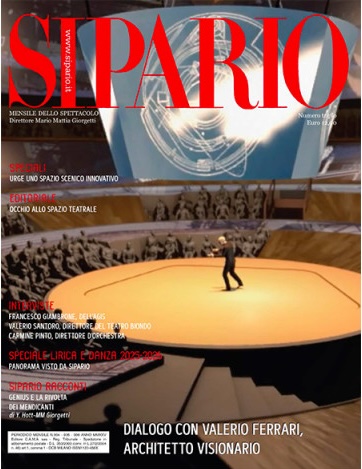
The interview appeared online in June 2025 and in the December 2025 print edition of SIPARIO magazine.
With the kind permission of the Italian magazine SIPARIO, we are publishing Valerio Ferrari's interview with journalist Valeria Patera, which appeared in the December 2025 issue of SIPARIO. We reproduce it below with a link to the original Italian version.
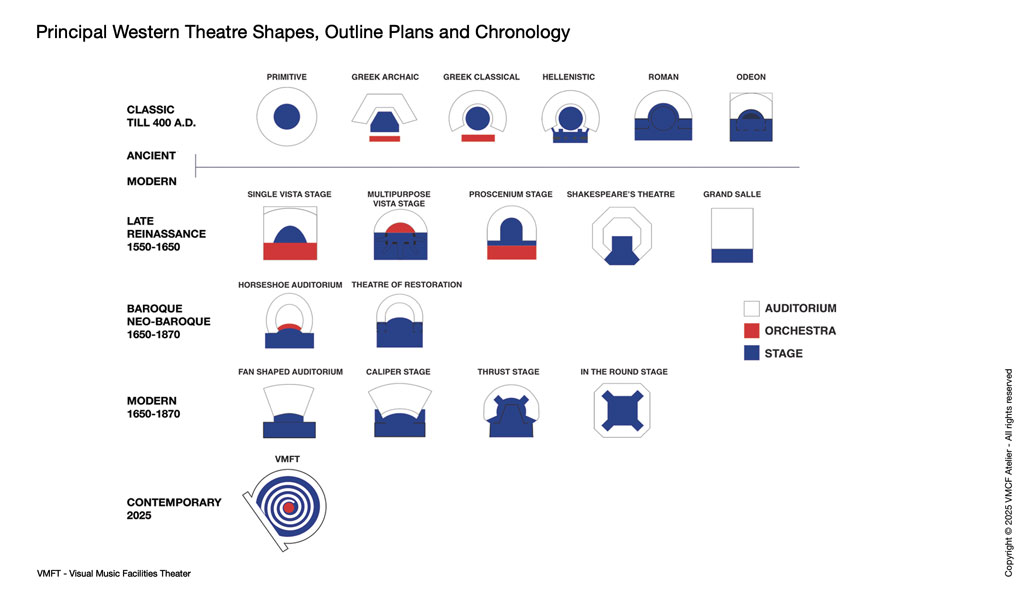
In addition, to better inform our readers, we are publishing below a very clear summary in the form of a synoptic table of theatre forms since antiquity, so as to fully grasp the originality of the project, and we have added a video at the end of the interview that will shed light on all the possibilities offered.
_______________________
For more than twenty years, Valerio Ferrari – architect, researcher and entrepreneur – has been developing a project aimed at redefining the relationship between the spectator and space with a new approach to enjoying the show. It is a bold project to redesign cultural space for overall enjoyment, defined as Visual Music Facilities Theatre (VMFT
What intuition inspired your vision for this innovative project?
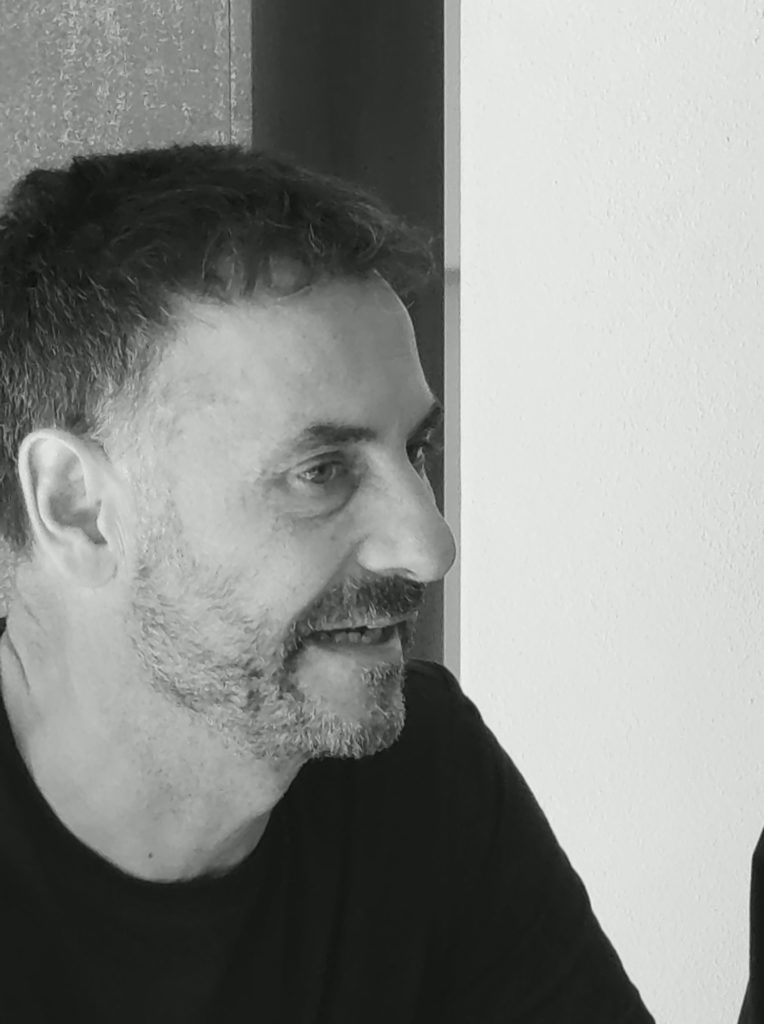
"My concept stems from years of immersion in opera. Working on stage as assistant director and set designer to Piero Faggioni during my architecture studies, I experienced intimate contact with performance in the world's greatest theatre venues: from La Scala to the Metropolitan in New York, from ROH Covent Garden to the Tokyo Opera. Being in constant direct contact with the artists on stage revealed an irrefutable truth to me: the intrinsic power of the performative act – the extraordinary physical and vocal transformation of the artist, the almost palpable resonance of the sound that saturates the environment – manifests itself in all its sublimity only from a close perspective. From the audience, paradoxical as it may seem, the experience tended to dissipate, to be less engaging for me, who was used to being in close contact with the artists. It was from this observation that the need arose to conceive a space capable of restoring to the audience that same intimacy and proximity to the artistic event. It was a question of dismantling the unitary paradigm of the traditional theatre experience and proceeding with a true deconstruction of entertainment, in order to then reconstruct it on innovative parameters, intrinsically suggested by the design of the hall itself."
How was this intuition translated into an architectural structure?
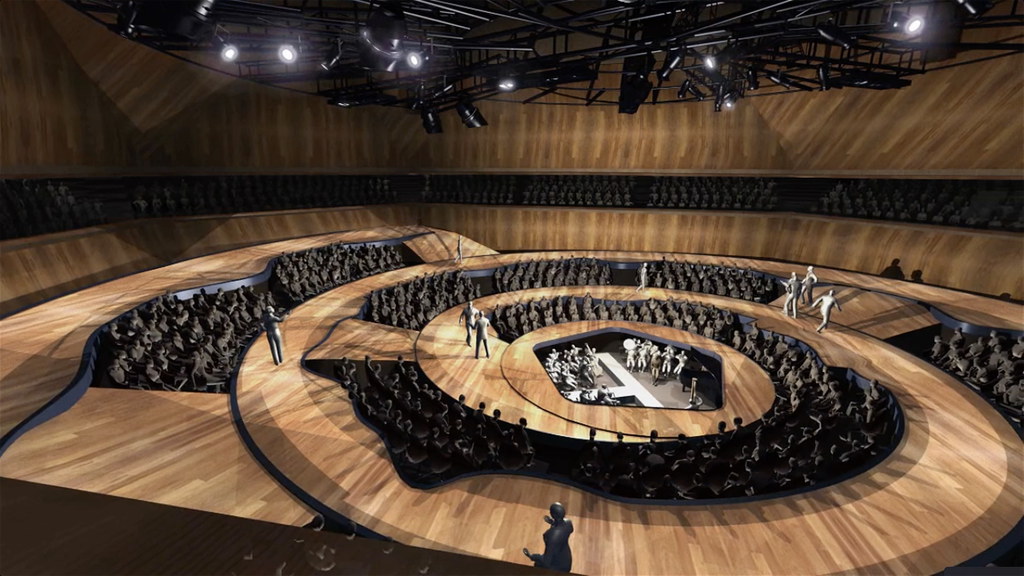
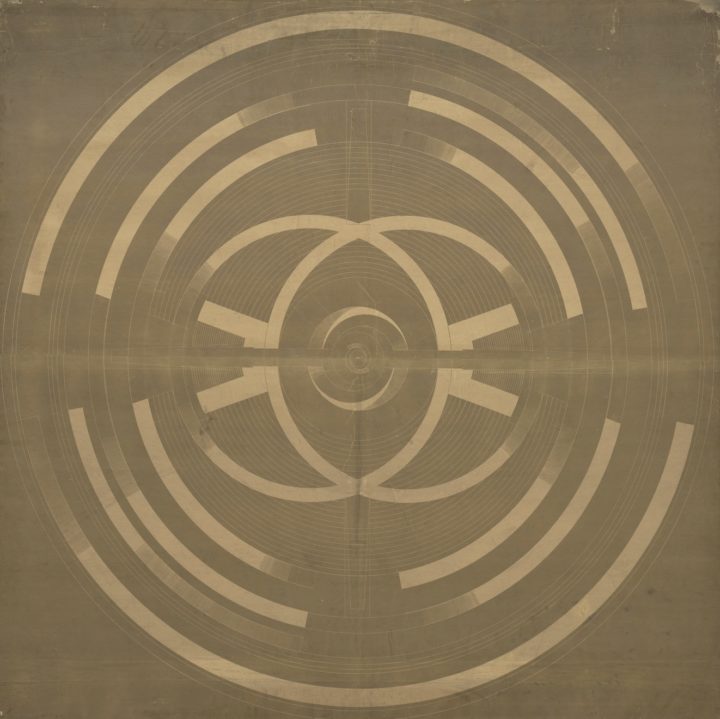
"The search for maximum formal functionality led me to observe nature, in particular shells and, specifically, the Nautilus. I imagined “dissecting” the Nautilus, orienting one segment towards the stage and the other towards the audience. This vision generated the spiral plan of the VMFT. It is not merely an aesthetic choice, but a functional principle that enables almost instant flexibility and transformability. This means that the VMFT is not tied to a single type of performance; it is anarchitectural chameleon, capable of accommodating and enhancing different forms of art, entertainment and learning. It represents a thoughtful and radical alternative to the traditional Italian theatre model, but also to the hangar, where anything is possible."
What new features does the VMFT offer to audiences and artists?
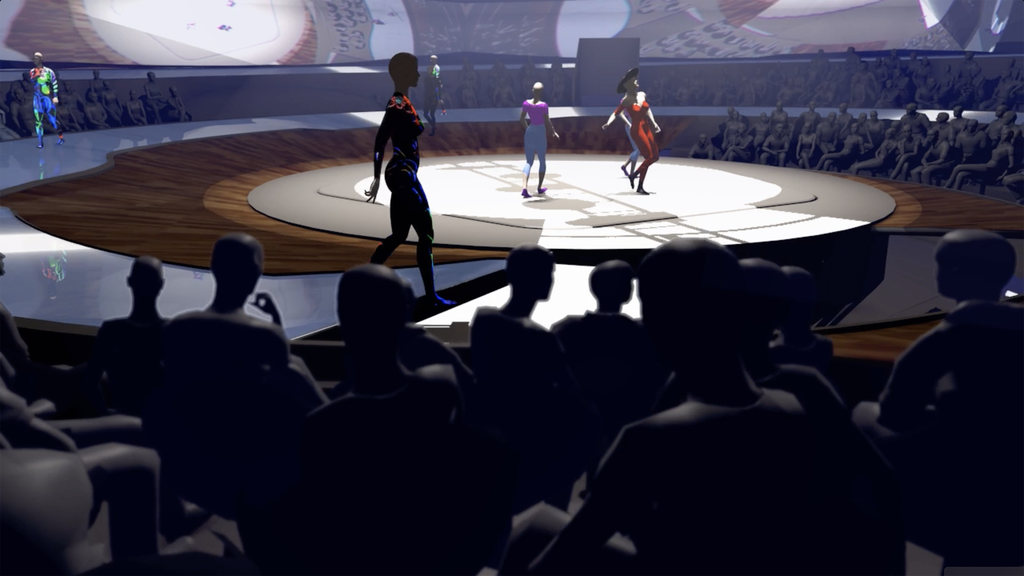
"Its dynamic geometry allows for rapid reconfiguration of the environment: from an “open” stage space with 360-degree rotating seats to a vast multifunctional agora, thanks to movable panels that extend from the stage area to cover the audience seats. The theatre seats 550 spectators in the spiral and 800 in the balcony. When the theatre is in “agora” configuration, it can accommodate up to 3,000 people. The entire space is enveloped in LED technology, but it is essential to point out that this is purely instrumental, entirely at the service of the artist, unlike contexts such as The Sphere in Las Vegas, where technology becomes the main attraction. The focus remains on the dynamic relationship between audience and actor, in which distance itself becomes a new, powerful expressive tool for directors and creators. The spiral shape, steeped in symbolism linked to evolution and time, merges time and space into a single image, with the orchestra pit at the centre.
This architecture offers a radically new relational dynamic: it is the “space itself” that takes centre stage.‘
How does VMFT integrate technology and dialogue with the younger generation?
’The integration of projections and LEDs makes VMFT inherently suitable for e-games, immersive e-learning, TeamLab-style digital art installations, but also for fashion shows, smart conferences and night clubs. These are expanding sectors that resonate deeply with the younger generation, who have grown up in a digital ecosystem.
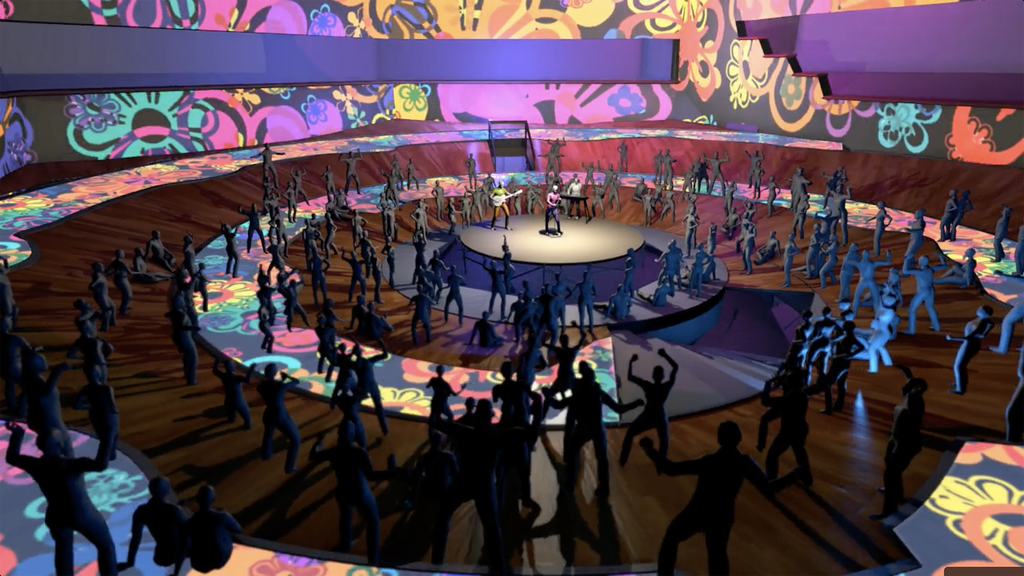
Young people have a highly developed visual and sensory memory, and this immersive space, with viewpoints that can be customised via smartphone, responds to this sensory evolution. There is no “privileged seat”; each user enjoys a unique and personal experience. The acoustics, which are entirely modular and spatialised, are designed to adapt instantly to any type of event, from prose to concerts, conferences to immersive screenings.‘
From dream to reality, is the VMFT a sustainable investment for the sector?
“Absolutely, and this is one of its most innovative attributes in terms of feasibility. While large modern complexes such as The Shed in New York or the Philharmonie de Paris require huge investments far exceeding hundreds of millions, the VMFT has an estimated cost of 50-60 million euros. This extraordinary accessibility makes it a replicable concept, an architectural “pattern” that can be rolled out in countless cities, generating economies of scale. It represents a democratization of urban space dedicated to culture and entertainment. The vision is to create a global network of homogeneous theatres: agile and compact structures – their diameter is equivalent to that of La Scala's stalls – but extremely efficient and accessible even to smaller urban areas. Its intrinsic multifunctionality and ability to operate 24 hours a day, 7 days a week, offer a potential return on investment and earnings that make it not only a bold artistic vision, but also a solid, tangible economic reality."
What is the cultural impact and long-term vision that VMFT could produce?
"My vision is for the VMFT to establish itself as a “worldwide” project, capable of transcending cultural boundaries and welcoming and promoting theatrical expressions not only from the West, but also from the rest of the world. We are working hard to make this a reality, with the first developments already underway in the United States. In short, it is the “scene of space” and “time” that is placed at the centre through an architecture which, while undoubtedly involving limitations and constraints (as Pierre Boulez pointed out in 2012 during an interview I did on the subject, noting the impossibility of staging operas with large choirs, while adding that he would be “very stimulated to write music for this space”), it is precisely within these limitations that it invites artists from all disciplines to engage in a creative revolution, to explore and conceive new languages. ”
How does this proposal fit into the historical panorama of “ideal theatres” and architectural visions for the stage?
“The Visual Music Facilities Theatre (VMFT) draws inspiration from the late 18th-century Panoramas, conceived by the painter Robert Barker, where the creation of a total illusion was achieved by integrating the viewer into the centre of a 360-degree painted canvas. It also follows in the footsteps of the great visions of 'ideal theatres” that have marked the history of architecture. I am thinking of the experiments of Frederick Kiesler and his “Infinite Theatre”, the famous “Fun Palace” by Cedric Price – which foreshadowed a dynamic and adaptable space – and the flexibility of the theatre in Cagliari by Maurizio Sacripanti. However, unlike many of these proposals, which are often confined to the theoretical realm or designed for specific directors and a single idea of performance, the VMFT stands out precisely because it lacks a rigid concept of theatre or performance. Its genesis lies in a pure architectural concept that frees form from its predefined function, opening it up to wide structural versatility. ”
The dialogue could continue, but we have said enough to imagine that it is possible to conceive of a new global stage, a mirror of the society it represents, just as the Greek polis represented itself in its theatre. It is a question of having the courage to embrace new visions that can redefine the boundaries of both performance and enjoyment, and rethink their relationship. It is about knowing how to seize the challenge implicit in this project and implement its innovative and necessary scope.
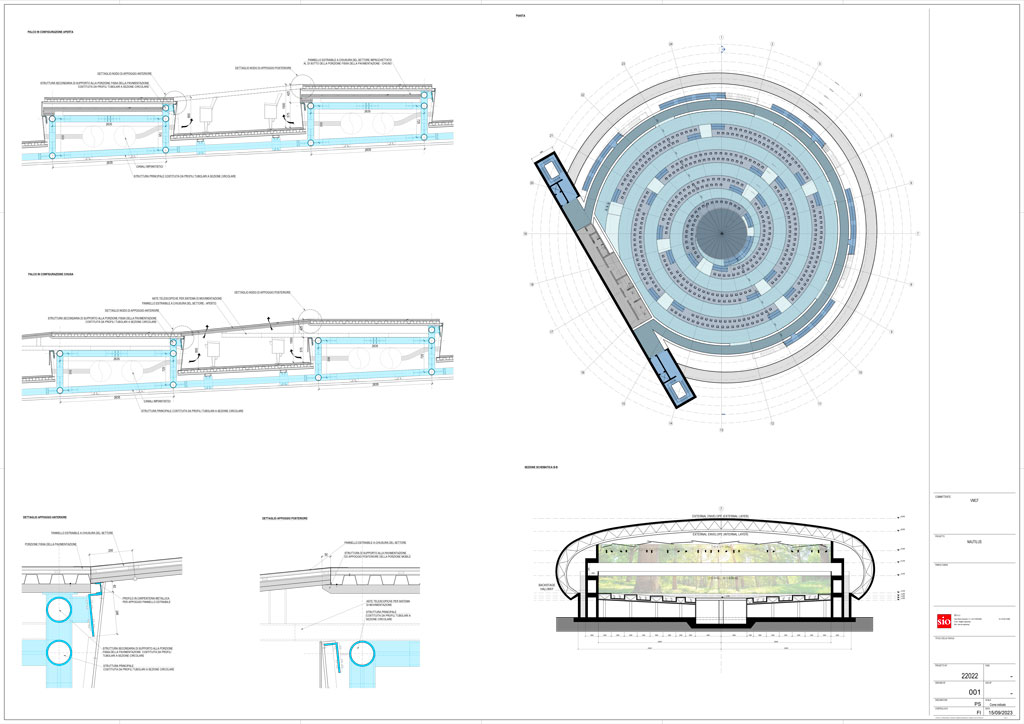
@ Valerio Ferrari (technical drawings)
@ Éric Fréchou (photos taken from the video)